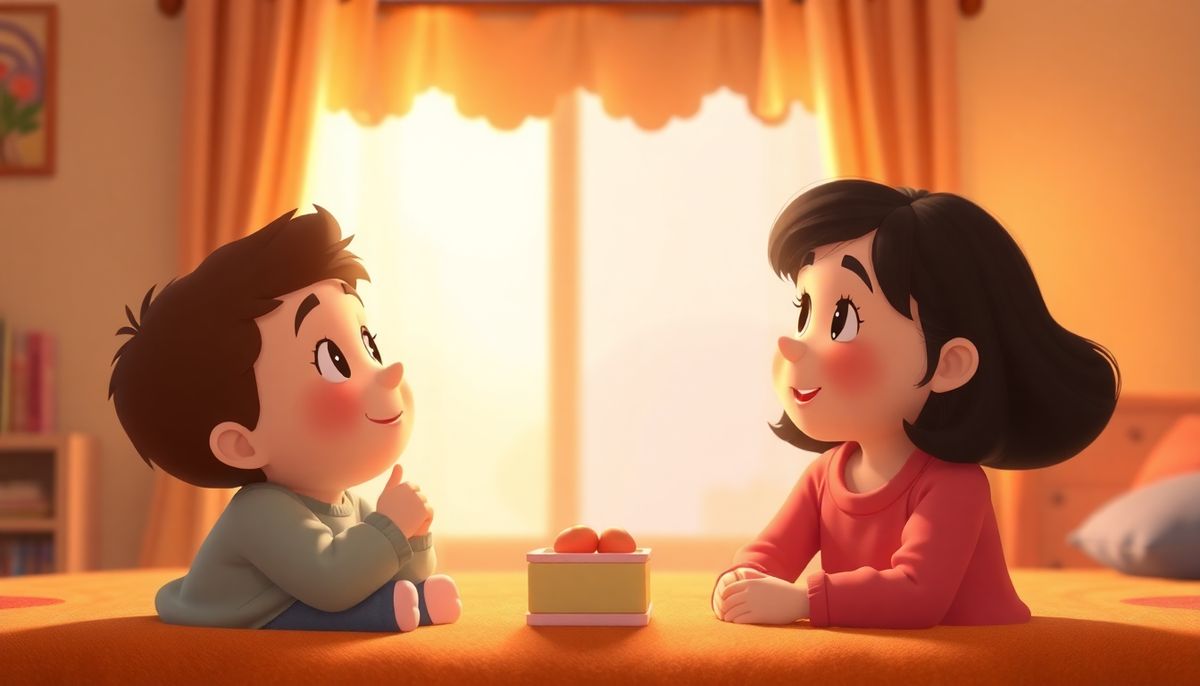
A new baby arrives, and within a week or two, your previously easygoing 3-or-4-year-old is suddenly asking for a bottle again, having tantrums over nothing, or announcing out of nowhere that they don't love the baby. If this sounds familiar, take a breath — this is one of the most well-documented, completely normal reactions in early childhood, and it's not a sign your older child is a bad sibling or that anything has gone wrong.
What's actually happening
From your older child's point of view, something enormous has changed: the person who used to be entirely theirs — attention, lap space, bedtime routine — is now shared, indefinitely, with someone who cries a lot and gets carried everywhere. Even in the most loving, well-prepared households, that's a real loss to grieve, not just a milestone to celebrate.
Regression (asking for a bottle, wanting diapers again, "baby talk") is a very common response. It's not manipulation and it's not a step backward developmentally — it's often your child unconsciously testing whether being more "baby-like" gets them some of that lost attention back. Acting out, clinginess, and sleep disruptions are common too. All of these tend to fade over weeks to a couple of months as your child adjusts and as routines stabilize.
What helps
1. Give the feeling permission to exist. "It's okay to feel like you don't love the baby sometimes — that's a normal thing to feel when something this big changes" is far more useful than "you have to love your baby sister." Forcing the "right" feeling tends to just push the real feeling underground, where it comes out sideways later.
2. Protect one-on-one time, even in small doses. Fifteen minutes of undivided, phone-down attention — reading together, playing a game they choose — does more for a jealous older sibling than an hour of divided attention. Consistency matters more than duration here.
3. Give them a real job, not a fake one. Kids this age respond well to being made a genuine helper rather than being sidelined: choosing the baby's outfit, "reading" to the baby, helping with bath time. The goal is to reframe the new baby from the reason I lost my parents' attention to someone I have an important role with. That reframe — from rival to responsibility — is often the single biggest lever for turning jealousy into pride.
4. Narrate the "before" too. Looking at photos or hearing stories of when they were the baby — how excited everyone was, how much they were loved and carried and fussed over — helps an older sibling feel like they're not being replaced in a story, but continuing to be a central character in it.
5. Expect regression, and don't punish it. If your child asks for a bottle or wants to be carried like a baby, a calm "sure, let's do that for a minute" costs you very little and usually resolves faster than a firm "you're a big kid now" — which can (unintentionally) confirm the fear that growing up means losing attention.
6. Watch for it to fade — and flag it if it doesn't. Most sibling adjustment issues meaningfully improve within a couple of months as the new routine settles in. If jealousy, aggression toward the baby, or regression is severe, persistent well beyond that window, or you're worried about your older child's safety around the baby, it's worth a conversation with your pediatrician — this is a common enough concern that they'll have practical guidance, not just reassurance.
Turning "rival" into "hero"
One of the most effective ways to help a jealous older sibling is giving them a story where they're still the main character — where the new baby doesn't take over the plot, but gives them a new, important role in it. That's the idea behind Big Sibling Pride, a personalized book starring your own child by name as the confident big sibling who helps, teaches, and grows into the role — read together during exactly the weeks when that reframe matters most.
The short version
Sibling jealousy isn't a parenting failure or a character flaw in your older child — it's a predictable response to a genuinely big change, and it responds well to protected one-on-one time, a real (not token) helper role, and permission to feel the hard feelings out loud instead of hiding them. Most families see real improvement within weeks to a couple of months.