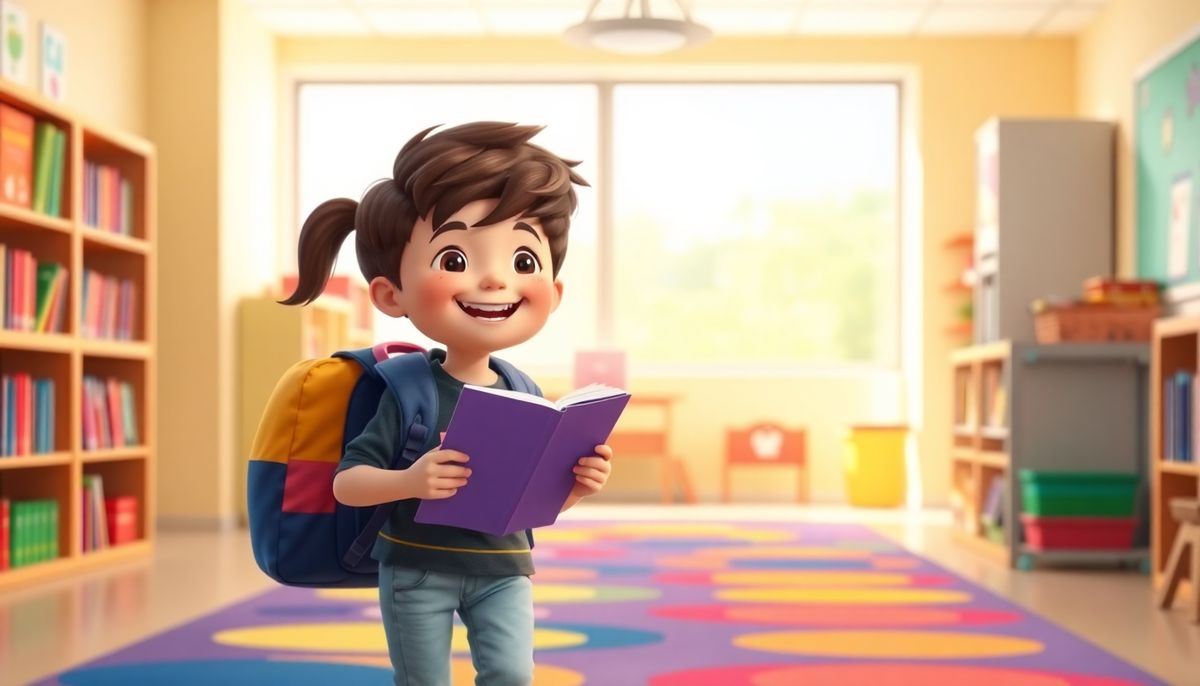
Every parent wants their child's first day of school to go well. So it's tempting to talk about it constantly in the weeks leading up — walk past the school, describe the classroom in detail, ask "are you excited?" every single day. Most of this comes from a good place. Some of it can quietly backfire.
Here's how to prepare an anxious child for their first day without accidentally teaching them that it's something to be anxious about.
The preparation paradox
Kids pick up on emotional cues constantly, including the ones adults don't mean to send. If a parent brings up the first day of school every day for three weeks, checking in on feelings each time, a child can reasonably conclude: this must be a big deal that requires this much preparation, which means it must be something to worry about.
That doesn't mean don't prepare — it means prepare with a light touch, on a schedule, rather than as an open-ended ongoing conversation.
A simple one-week plan
7 days out: Mention school once, briefly and positively. "In a week you start kindergarten — you're going to meet your teacher and make new friends." Leave it there. Let your child bring it up again if they want to talk more.
4-5 days out: If your school allows it, do a low-key visit — walk by the building, see the playground, look at photos of the classroom online if available. Keep the tone matter-of-fact and upbeat, not a big production.
2-3 days out: Walk through the logistics together in concrete terms: what the morning routine will look like, who drops them off, what happens at pickup, where they'll put their backpack. Anxious kids are often less scared of "school" as a concept and more scared of specific unknowns — not knowing where the bathroom is, not knowing who to sit with at lunch. Concrete answers to concrete questions do more good than reassurance.
The night before: Pack together, pick out clothes, keep the evening calm and normal. Avoid introducing new information or new worries this close to bedtime — if new questions come up, it's fine to say "that's a great question, let's find out tomorrow together."
The morning of: Keep goodbyes short, confident, and consistent. A long, emotional goodbye — however well-intentioned — can signal to a child that this is a moment worth being upset about. A quick hug, a clear "I'll see you at pickup," and a warm but brief exit tends to help kids settle faster once you're gone (even if the goodbye itself feels harder for you).
What to say when they ask "what if..."
Anxious kids often generate a stream of "what if" questions in the days before school: what if I can't find the bathroom, what if nobody plays with me, what if I miss you too much. Two things help here:
- Answer the concrete ones concretely. "You'll ask your teacher and she'll show you" is more useful than "don't worry about it."
- Normalize the feeling without solving every hypothetical. "It's normal to feel nervous about something new — lots of kids in your class will feel that way too on the first day" does more good than trying to logically rule out every possible bad outcome, which is a game you can't win (there's always one more "what if").
Give them a mental script for the hard moment
Most first-day anxiety peaks at one specific moment: the drop-off. Having a rehearsed, familiar phrase to reach for in that exact moment — something practiced well before the first day, not introduced for the first time in the classroom doorway — genuinely helps. This is the same idea behind First Day Brave, a personalized story where your own child, by name, walks through exactly this moment and comes out the other side feeling capable. Reading it together in the calm days before school gives your child a rehearsed, positive version of the day to draw on when the real one arrives.
The bigger picture
A little nervousness before the first day of school is developmentally normal and doesn't need to be eliminated — it needs to be small enough that your child can walk through the door anyway. The goal isn't a child who feels zero anxiety. It's a child who has a plan for what to do with the anxiety they do feel. That's a skill, and like any skill, it gets built through calm, concrete practice — not through avoiding the topic, and not through over-discussing it either.