Somewhere between ages 3 and 7, a lot of kids who used to fall asleep without a fuss suddenly can't handle the dark. The nightlight that used to be optional is now mandatory. The hallway light has to stay on. Some nights there's a small shape at the edge of your bed at 2am, whispering that there's "something" in the closet.
If this is your house right now, you're not doing anything wrong, and neither is your child. Fear of the dark is one of the most common developmental fears in early childhood — common enough that it's considered a normal, expected stage rather than a red flag.
Why fear of the dark shows up now (and not earlier)
Toddlers usually aren't afraid of the dark. That fear tends to appear once a child's imagination matures enough to conjure vivid, specific images — a shape in the closet, a monster under the bed — but before their reasoning skills are developed enough to reliably talk themselves out of it. In other words: fear of the dark isn't a sign something is wrong. It's often a sign your child's imagination is developing exactly on schedule.
That's genuinely useful to know, because it changes how you respond. You're not fixing a problem — you're helping your child build a skill: the ability to feel a big feeling and handle it anyway.
What doesn't work (and why)
Before the strategies that help, a quick word on the ones that tend to backfire:
- "There's nothing to be afraid of." To an adult, obviously true. To a child whose brain is generating vivid, specific fear, this can feel dismissive — like their very real experience is being denied. It rarely calms anyone down.
- Checking under the bed / in the closet "to prove" nothing's there. This one is tempting because it feels helpful, but it can quietly reinforce the idea that checking is necessary — that if you hadn't checked, something might have been there. Over time some kids need the check every night, then twice, then three times.
- Letting the fear run the household indefinitely (permanently sleeping in your bed, every light in the house on all night) without a plan to build skills. Comfort in the moment is fine and normal; comfort as the only strategy tends to keep the fear alive rather than shrink it.
Six things that actually help
1. Name it without amplifying it. "You're feeling scared about the dark right now" is very different from "there's nothing to be scared of." Naming the feeling calmly, without arguing it away, helps a child feel understood — and kids who feel understood calm down faster.
2. Give the fear a job — turn it into imagination, not logic. Since the fear is imagination-driven, logic often can't out-argue it. What can: more imagination, pointed in a different direction. Help your child re-story the shadow — "that shape on the wall is actually your stuffed dinosaur's shadow, and dinosaurs are great at guarding rooms." This works with the same imaginative machinery that's producing the fear, instead of fighting it.
3. Teach one physical coping tool, and practice it in daylight. Deep breathing, a specific comforting phrase, or holding a chosen "brave object" (a stuffed animal, a small flashlight they control) all work better if you practice them when your child is calm — at breakfast, in the car — not for the first time at 9pm mid-meltdown. The goal is a tool that's already familiar by the time it's needed.
4. Use light strategically, not limitlessly. A dim, warm nightlight is a reasonable, permanent accommodation — it's not "giving in." But if the fear seems to be growing rather than shrinking over several weeks, that's worth paying attention to (see below).
5. Build a short, consistent bedtime script. Fear thrives on uncertainty. A predictable sequence — same three sentences, same comforting phrase, same order of events — gives your child's brain fewer unknowns to fill in with scary content.
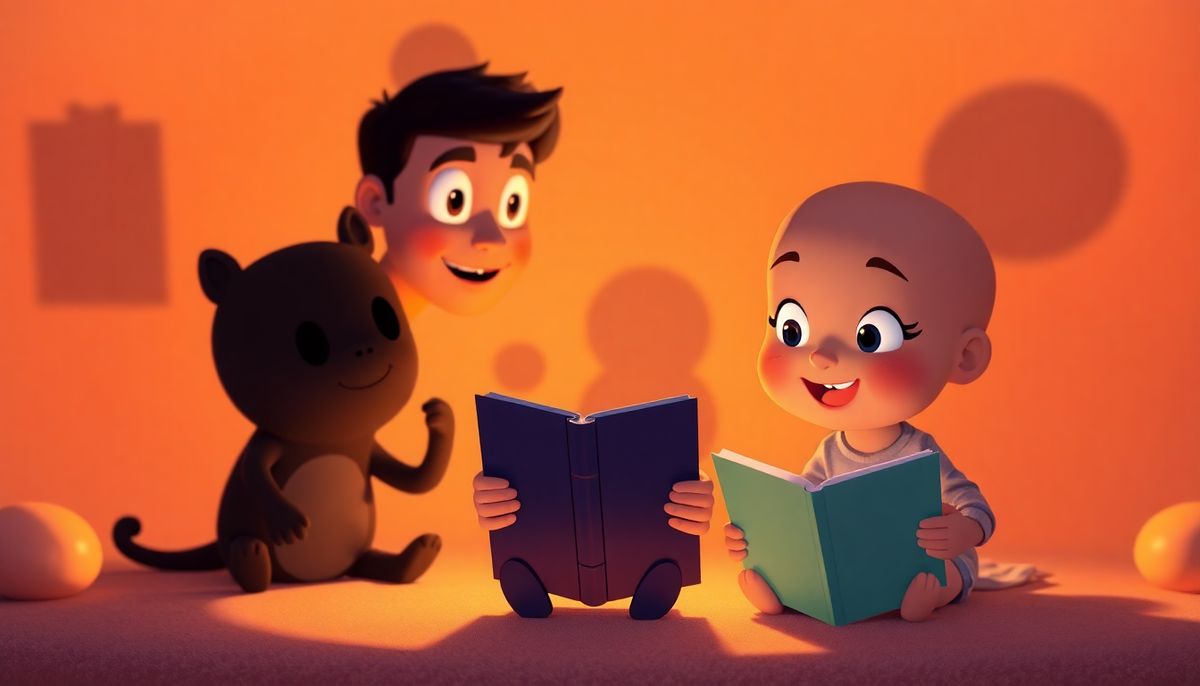
6. Read about it together, outside of bedtime. Stories where a child character faces the same fear and comes through it — read during the day, not right before lights-out — give kids a rehearsed mental script to reach for later. This is most effective when the child in the story feels like them: same age, same kind of room, facing the exact same shadow-in-the-closet moment. That's the whole idea behind Brave in the Dark, a personalized book that puts your own child, by name, at the center of exactly this story.
When to check in with your pediatrician
Most fear of the dark resolves gradually over months as kids' coping skills catch up to their imaginations. It's worth mentioning to your pediatrician if the fear is getting worse rather than better after a few weeks of consistent strategies, if it's accompanied by fears during the daytime too, or if it's seriously disrupting sleep for the whole family on an ongoing basis. That's not a sign you've failed — it just means it's worth a second set of eyes.
The short version
Fear of the dark at this age is common, expected, and not a reflection of anything you're doing wrong. The kids who move through it fastest usually aren't the ones whose parents argued them out of it — they're the ones who got a calm, consistent bedtime routine, one practiced coping tool, and a story where a kid just like them turned out to be brave.